The useful part first
Key takeaways
- Use sewer rodding when the symptoms suggest a shared line obstruction, not just one fixture.
- A cleanout, if accessible, usually makes the visit more straightforward, but the contractor still has to confirm the best access point.
- If the line keeps clogging after cleaning, inspection often becomes the next useful question.
- Frankfort’s sewer rules are separate from private service responsibility, so it helps to confirm which utility serves the address before assuming anything.
A sewer line problem usually shows up as more than one fixture acting strangely. You might notice a toilet that bubbles, a tub that drains slowly when the washer runs, or wastewater backing up at a low point in the house.
Sewer rodding is a mechanical cleaning step for the main line, not a catch-all fix for every backup. It’s used when the problem looks like an obstruction in the shared sewer line rather than a single sink or shower drain.
For Frankfort homeowners, the useful question is simple: what did you see, what does that pattern point to, and what access will the contractor need to work on the line?
If wastewater is backing up, pause water use and do not run fixtures to recreate the problem. That only adds more water to a line that may already be full.
Start with what you observed
The best way to describe the problem is by the pattern, not by guessing the cause. A single slow bathroom sink points in a different direction than a basement floor drain that starts gurgling when a toilet is flushed.
Multiple fixtures involved usually mean the issue is beyond one branch drain. That can include a main-line blockage, an offset that catches debris, or buildup that has narrowed the pipe enough to slow flow under normal use.
If you’re not sure whether the problem is local or shared, note which fixtures are affected, what action seems to trigger the backup, and whether the water rises, drains slowly, or gurgles before it stops moving.
- One fixture only often points to that fixture’s drain branch.
- Two or more fixtures can suggest a shared line problem.
- Backups at low fixtures often show where the line is overwhelmed first.
- Odd noises matter, but they are less useful than the actual water behavior.
A brief, clearly hypothetical example
For example, suppose the toilet on the main floor flushes normally, but the shower starts filling when the nearby laundry drains and the basement floor drain makes a bubbling sound. That pattern suggests a shared-line issue rather than three separate fixture clogs, so rodding the main sewer line becomes a reasonable next step to discuss.
How sewer rodding fits the job
Sewer rodding uses a mechanical cable and cutting or clearing head to break through obstructions in the line. It’s a practical option when the blockage is close enough to reach through an access point and the line’s condition allows it.
It works best on obstructions that can be cut through or pulled apart. Grease buildup, paper accumulation, sludge, and some root intrusions are common reasons a line needs mechanical cleaning.
It is not the same as repairing a broken pipe. If the line is collapsed, badly offset, or separated, rodding may open flow for a while, but it won’t remove the underlying defect. That’s one reason camera inspection can matter after or alongside cleaning.
- Best suited for reachable obstructions in the main sewer line.
- May restore flow when buildup or debris is the main issue.
- May not solve a damaged, shifted, or collapsed pipe.
- Can be paired with a later inspection if recurrence is a concern.
When another method may be discussed
A contractor may recommend a different approach if the line is heavily coated, has recurring grease, or has a root pattern that needs more than a quick pass. In those cases, hydro jetting may come up, or a more detailed look with a camera may be the better next step.
Water backing up now?
Pause water use and call. Emergency calls are accepted 24/7.
What access the contractor may need
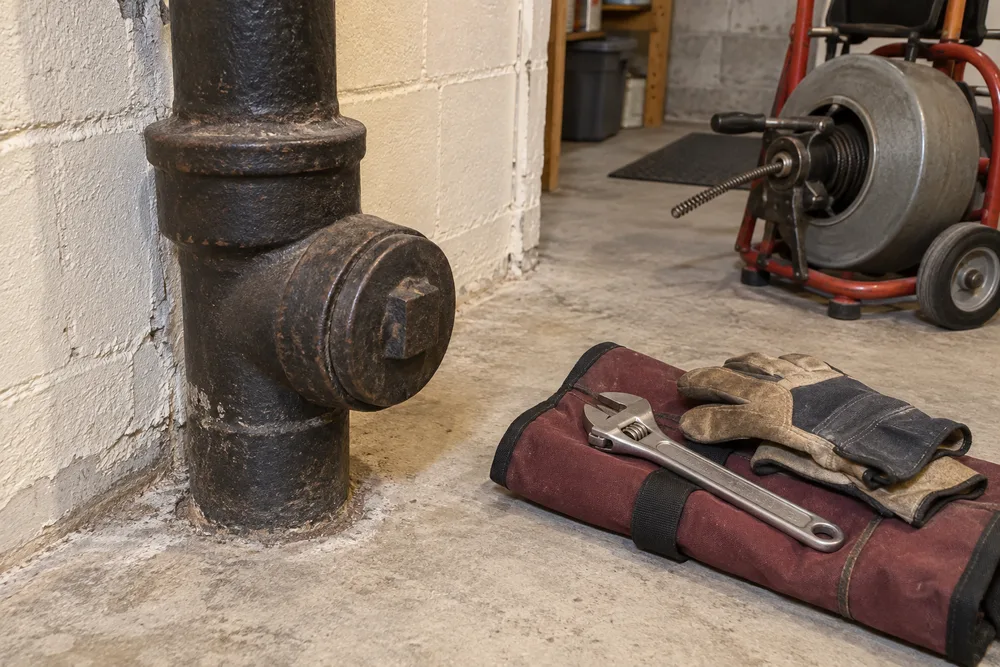
The visit usually starts with finding the best entry point into the line. That might be an interior cleanout, an exterior cleanout, or another approved access point if one exists and is usable. If you know where the cleanout is, mention it when you request service.
Do not remove a cleanout cap if wastewater is backed up and the line may be under pressure. Let the contractor handle access and decide whether that point is safe to use.
If you’re preparing the space, clear access around the area, keep pets away, and have a quick description ready of what happened first. That short explanation often helps the contractor choose the right starting point.
- Know where the cleanout is, if you already know.
- Keep the area around the access point open.
- Describe the first sign you noticed, not just the final backup.
- Do not try to force a backed-up line to drain before help arrives.
What makes access easier
A clear path to the basement, utility room, or exterior access point saves time during the visit. If there’s a floor drain or laundry area involved, point that out as well, because the location of the first overflow often helps identify the line section that needs attention.
Frankfort utility questions that matter
Frankfort publishes separate water and sewer rules, and the sewer chapter includes restrictions on unpolluted drainage water entering sanitary sewers. That doesn’t tell you which private line is blocked, but it does show why responsibility questions should be asked carefully.
Don’t assume a mailing address tells you who serves the sewer line. The useful first step is to confirm the actual utility or serving authority for the property and then match the observed symptoms to the right service path.
If you want to compare a private service issue with a broader system concern, the referral process explains how an inquiry reaches a participating contractor, and the emergency page covers active backups that need urgent intake.
- Frankfort has separate sewer rules and connection requirements.
- Responsibility can depend on the actual serving utility.
- A symptom description is more useful than an assumption about the pipe.
- Current utility guidance should be checked when the question is responsibility, not just cleaning.
What not to infer
The village code does not mean every home is handled the same way, and it does not tell you that every backup belongs to the same pipe segment. A contractor still has to look at the symptoms, the access points, and the line conditions before recommending cleaning or inspection.
When an inspection becomes useful
If rodding clears the line and the problem stays gone, that may be enough for now. If the backup returns, if the cable meets repeated resistance, or if the symptom pattern changes quickly, inspection can help show whether the line has buildup, roots, or a structural issue.
Inspection is most helpful when you need to know why the clog returned. It can also help before major repeat work, especially if you’re trying to decide whether the issue is likely to stay a cleaning problem or needs a different plan.
You can read more about symptom patterns in the sewer backup guide and about the difference between a blockage and pipe damage in the clog-or-damage guide.
- Use inspection when clogs come back quickly.
- Use it when cleaning meets repeated resistance.
- Use it when you want to see condition, not just restore flow.
- Use it when the next decision depends on what the pipe looks like.
What the contractor may tell you after cleaning
A contractor may say the line is open but still show signs of trouble, such as visible scale, root entry, or repeated snag points. That is different from a simple one-time clog, and it changes what makes sense next.
Booking the right kind of help
If you’re ready to move forward, book sewer rodding when the problem looks like a main-line obstruction and you want the line opened as the first step. If the issue is limited to one sink, shower, or toilet, a fixture-specific drain service is usually a better fit.
The next useful conversation is about symptoms, access, and whether the line has backed up before. Those details help the responding contractor decide what equipment to bring and whether additional inspection should be discussed after the line is open.
You can also compare related services like drain cleaning for fixture drains or sewer camera inspection if you already know the line keeps failing and want to see why. If you need to understand how referrals are routed, the referral process lays that out in plain language.
- Choose sewer rodding for suspected main-line blockage.
- Choose fixture drain cleaning when the problem stays local.
- Choose inspection when recurrence or pipe condition is the issue.
- Share the symptom pattern before the visit is scheduled.
What happens after the request is sent
Plumbers 911 is operated by Plumbers Local 130 and refers participating contractors who price and perform the work. Availability and arrival are confirmed by the responding contractor, so the most helpful part of your request is a clear description of what the sewer is doing right now.
How homeowners usually sort the problem
| What you noticed | What it often suggests | Useful next step |
|---|---|---|
| One sink or shower is slow | A fixture drain issue | Ask about fixture drain cleaning |
| Several fixtures back up together | A shared sewer line issue | Ask about sewer rodding |
| The problem returns soon after cleaning | Possible roots, buildup, or pipe condition | Ask about inspection |
| Water is backing up now | Active sewer backup | Pause water use and use emergency intake |
Questions homeowners ask
Do I need sewer rodding if only one drain is slow?
Not usually. One slow sink, tub, or shower often points to that fixture’s branch drain. Rodding the main line makes more sense when several fixtures are affected or wastewater is backing up at a lower point in the house.
Can rodding clear roots?
It can sometimes cut through or loosen root intrusion enough to restore flow, but it doesn’t fix why roots got in. If roots keep coming back, inspection and a longer-term plan may be discussed.
What if the line backs up again after it’s cleaned?
That usually means more than a simple blockage was present, or the line needs a closer look. A repeat backup is one of the clearest reasons to ask about camera inspection.
Should I run water to see if the clog is still there?
No. If wastewater is backing up, stop running fixtures. Adding more water can make the spill worse and can push the problem into another fixture or low area.
How do I know if the city or my private line is involved?
Start with the actual serving utility and the symptom pattern. Frankfort has sewer rules, but a contractor still needs to identify whether the issue is on the private line or somewhere else before recommending work.
Local resources
Use these official resources for municipal or utility information. They are separate from Plumbers 911.